LUAS Cork introductory banner

Welcome to Luas Cork

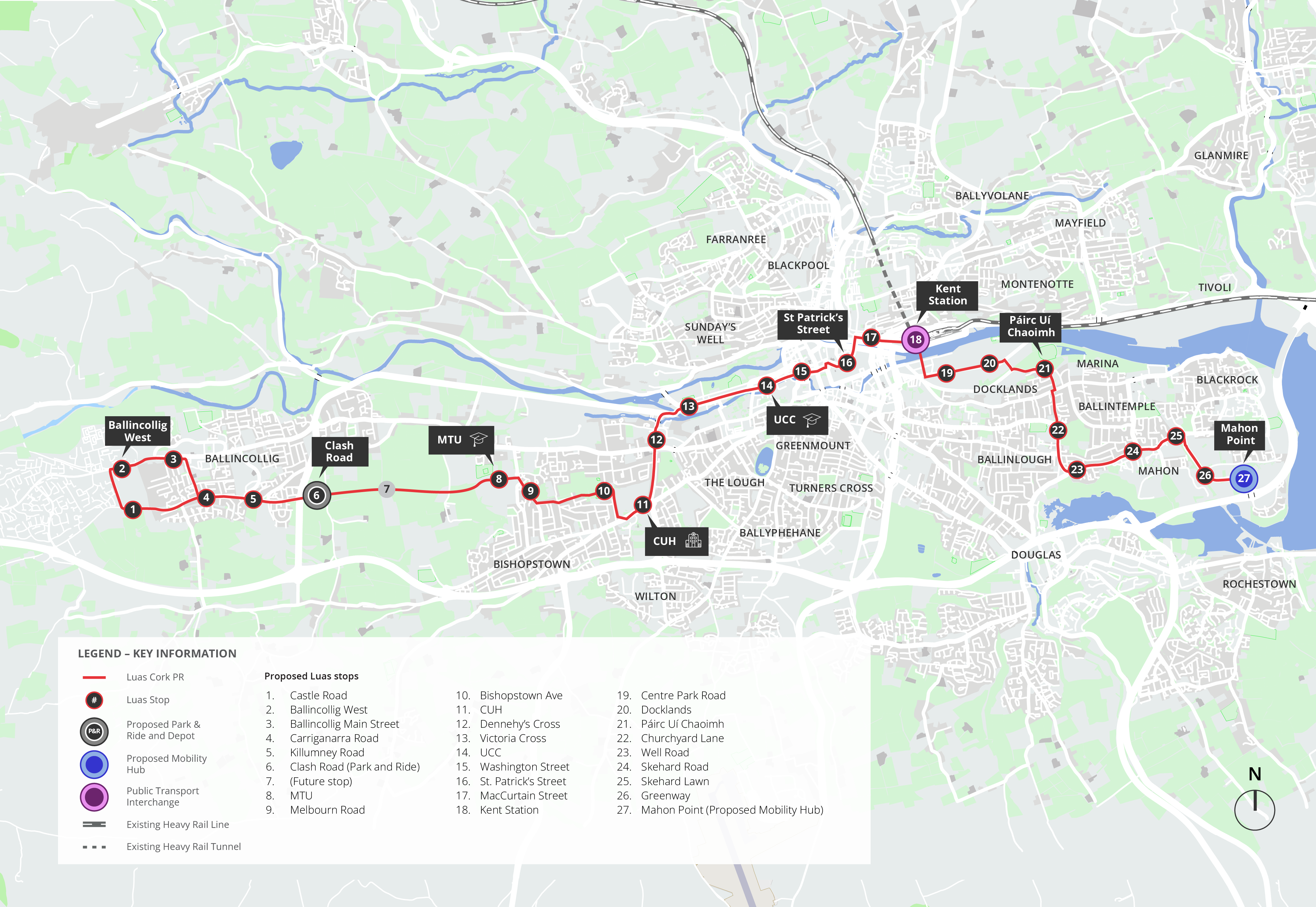
Luas Cork is a proposed light rail line running from Ballincollig to Mahon Point, connecting key destinations such as MTU, Cork University Hospital, UCC, Cork city centre, Kent Station, Cork Docklands, Páirc Uí Chaoimh, Blackrock and Mahon.

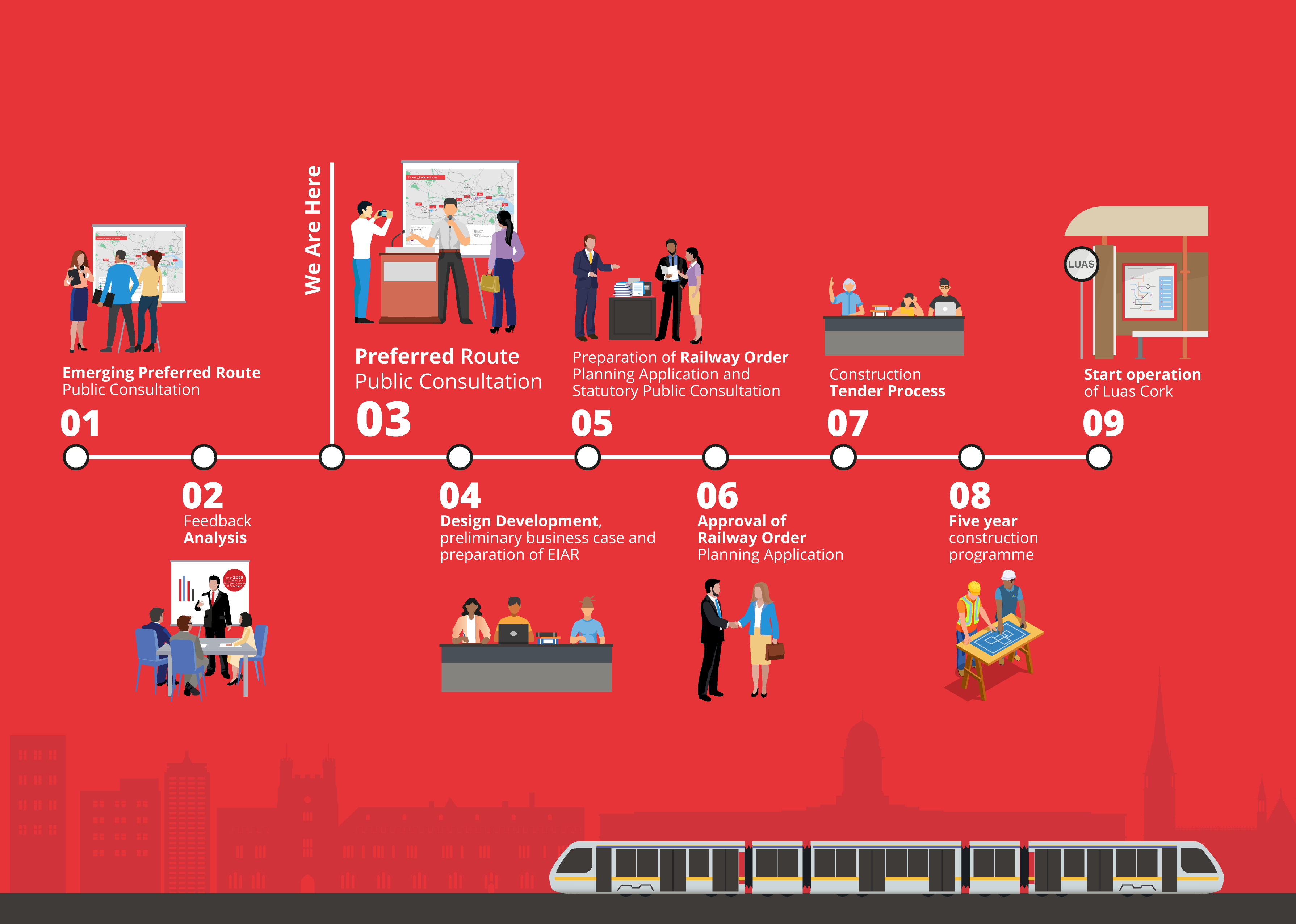
We have launched a non-statutory public consultation on the Preferred Route. This will run from 11am Friday 17 April until 5.30pm on Friday 12 June.

Please also join us on one of our open days to view drawings and where the project team will be available to answer your questions.

You can learn all about the route here and find out how to have your say.

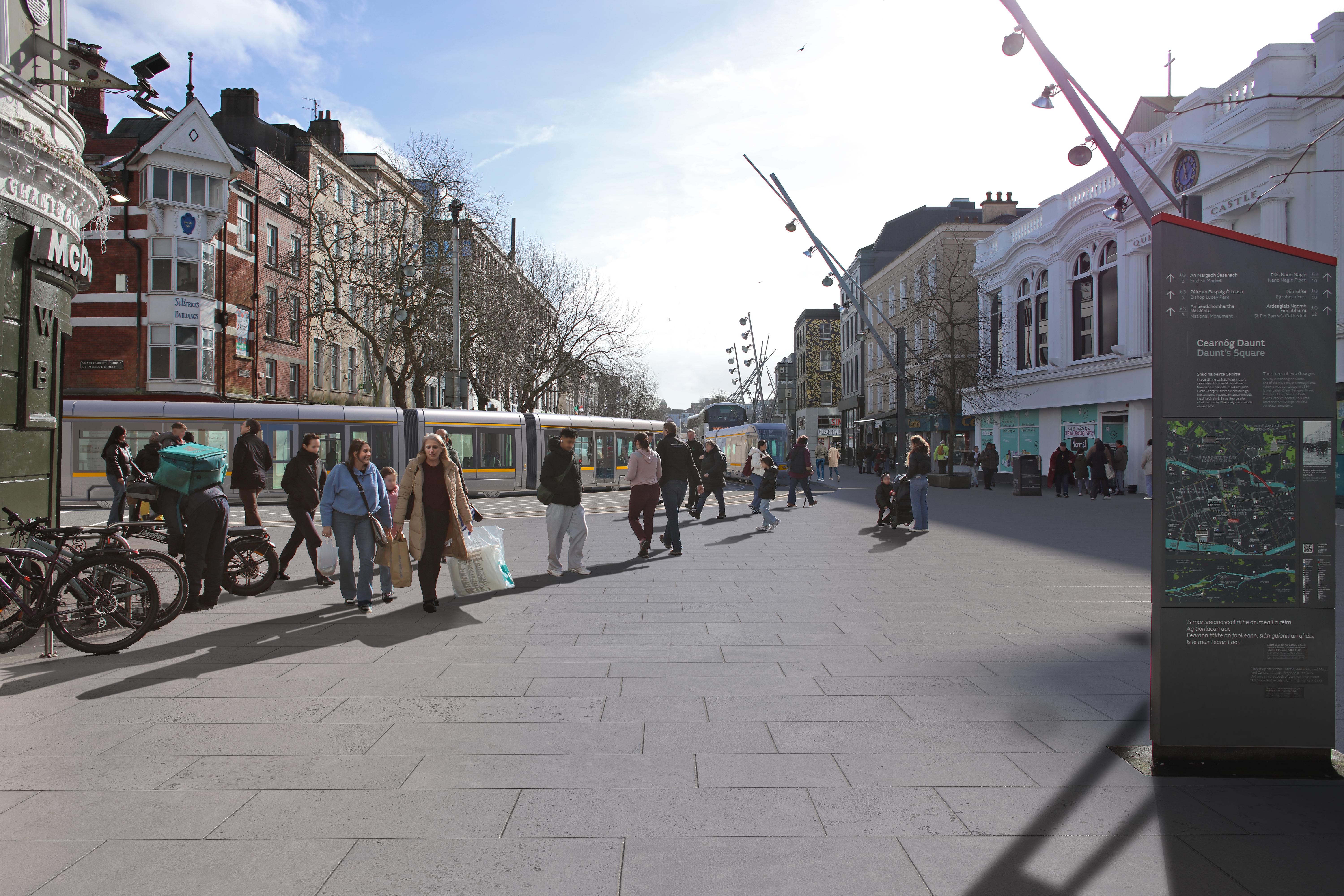
Indicative view from Daunt's Square

Date Location Time
06/05/2026 Kingsley Hotel, Victoria Cross 12:00pm - 8:00pm
07/05/2026 Páirc Uí Chaoimh 12:00pm - 8:00pm
12/05/2026 The Carraig Centre, Ballincollig 12:00pm - 8:00pm
13/05/2026 Metropole Hotel, MacCurtain Street 12:00pm - 8:00pm

What is Luas Cork?

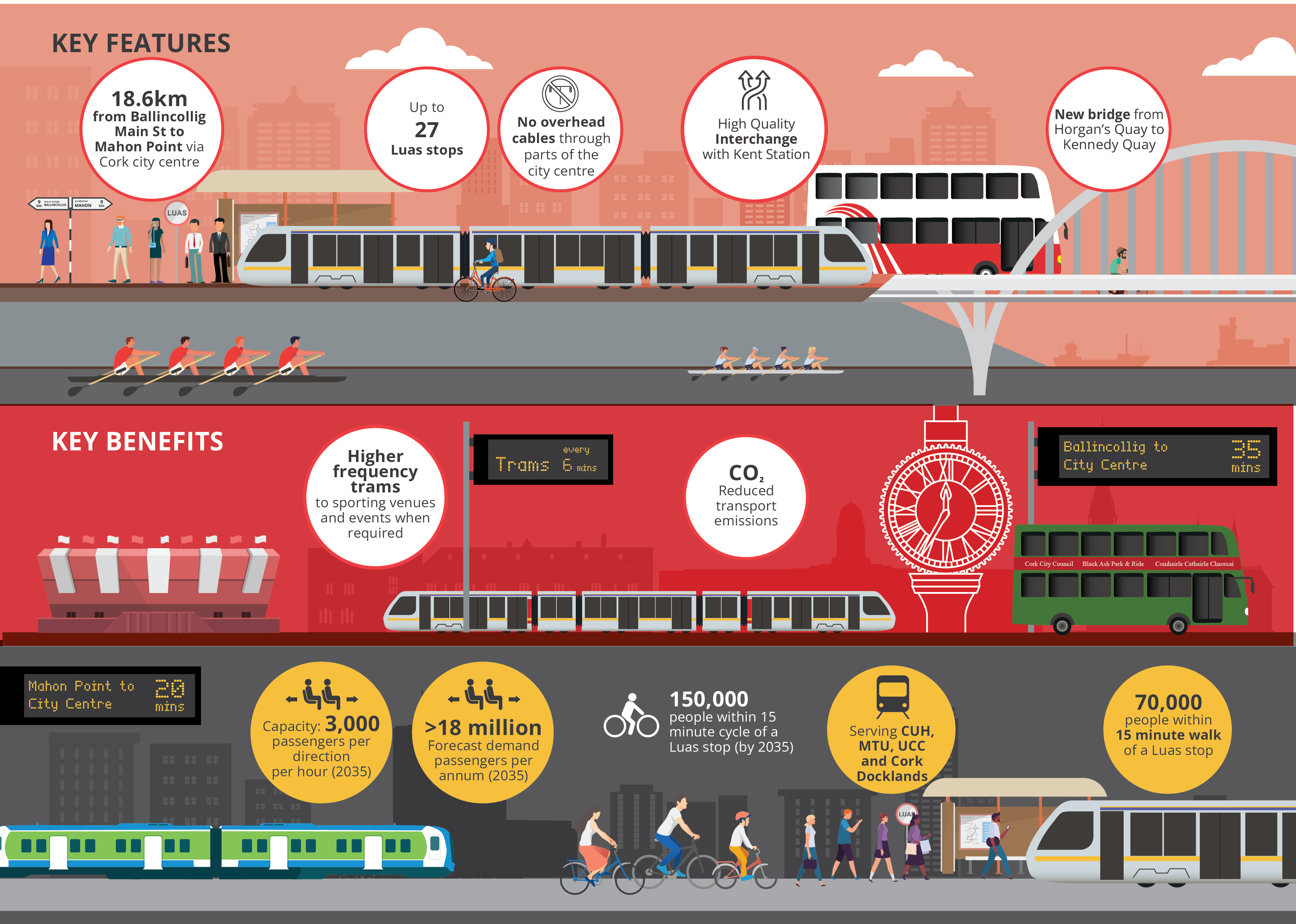
Luas Cork will transform Cork city, creating a liveable, walkable, pleasant city. It is a proposed light rail line running from Ballincollig to Mahon Point, connecting communities and key destinations such as Munster Technological University, Cork University Hospital, University College Cork, the city centre, Kent Station, the Docklands, Páirc Uí Chaoimh, Blackrock and Mahon.

Cork’s population is projected to grow by 50 per cent over the next 20 years. Luas Cork is essential to enabling sustainable growth. It will reduce traffic and carbon emissions, unlock housing and jobs growth.

Luas Cork is a central part of the Cork Metropolitan Area Transport Strategy (CMATS) that will deliver integrated public transport including BusConnects, heavy rail improvements and safe cycling and walking infrastructure.
Key Benefits

The Emerging Preferred Route Consultation

A detailed report on submissions made during the 2025 consultation is available here. Here’s our response to some of the more popular requests.

The impact of the EPR on Churchyard Lane and Ballintemple was the subject of many concerns raised by residents and businesses in the area.

We explored alternative routes that might allow us to reach key destinations while avoiding the pinch-point at Churchyard Lane. The most feasible alternative option was to revert to the route proposed in CMATS - the Greenway. After much study we concluded that there were too many negative impacts to justify this alternative.

  • Moving to the Greenway would mean reaching fewer passengers.
  • The character of the Greenway would change irrevocably. Space would be limited in places for the thousands of people who delight in the natural beauty of this amenity.
  • There are potential effects on the Greenway’s biodiversity, historic bridges and railway structures.
  • The presence of a high-pressure gas mains and pumped main drainage makes the construction of a tram line extremely challenging.
  • An alignment within the Greenway would be restricted to a single-track arrangement which creates operational constraints and a ‘cap’ on future capacity.
  • Without this alternative, the most viable way to make Luas Cork work is to go up Churchyard Lane. It’s the best way to serve the whole city and all its people. We commit to working very closely with local residents and businesses to minimise the impact.

Many submissions concerned the proposal to create a one-way loop through Ballincollig via Station Road and Leo Murphy Road. It was suggested that the EPR should be moved further west, broadening the catchment area to include existing housing, future housing and major industry. The impact on Station Road caused concerns around accessibility - especially at school drop-off times.

The Preferred Route is moving further west as far as Flynn’s Road which will widen the catchment area. For now, the case to go as far as Dell Technologies is not strong enough, but the design does not preclude this in the future. The proposed route still involves Station Road, but we’ve made some changes to improve access. Traffic will now be two-way as far as Beech Park (when travelling from the south on Station Road) and other changes will minimise the impact on the Church of St Mary and St John. We have also improved the road configuration to provide footpaths on both sides of the road.

Residents on Melbourn Road and Curraheen Road expressed concern about existing traffic congestion which would be exacerbated by Luas.

The biggest change from the EPR to the Preferred Route occurs at the northern end of Melbourn Road. Rather than continuing southwards on Melbourn Road and on to Curraheen Road, the route will now turn east and run uphill past Bishopstown Community School, Ballinaspig Lawn, Bishopstown GAA, Highfield Rugby Club, Coláiste an Spioraid Naoimh, Saint Columba’s Convent and then through Cork University Hospital (CUH) campus.

Because of the segregation in this area, the new route will shorten journey times and significantly improve the reliability of the Luas across the whole line. It provides excellent access for the schools and sports clubs and will reduce traffic congestion in the area. Direct access into CUH will provide an attractive alternative to cars for its staff, patients and visitors. TII will be engaging directly with the clubs, schools and CUH on the details of this proposal to minimise the impact on their lands and maximise the benefits to all.

The public, key stakeholders and elected representatives expressed huge support for Luas Cork with many suggestions to extend the proposed route in all directions: south to the airport, to Douglas, Carrigaline and Rochestown, west towards Classis Lake and Ovens, and north to Glanmire, Hollyhill and Blackpool.

The integrated transport strategy for Cork (CMATS) identified that light rail was an appropriate solution along an east-west corridor between Mahon and Ballincollig. CMATS sets out the transport solutions for other areas of the city.

The current scope of the project, therefore, only considers the provision of light rail along this corridor. There may be opportunities to provide light rail to serve other areas in the future and the public will have an opportunity to inform any future strategy.

Luas Cork Preferred Route

Preferred Route Map

Ballincollig to Munster Technological University

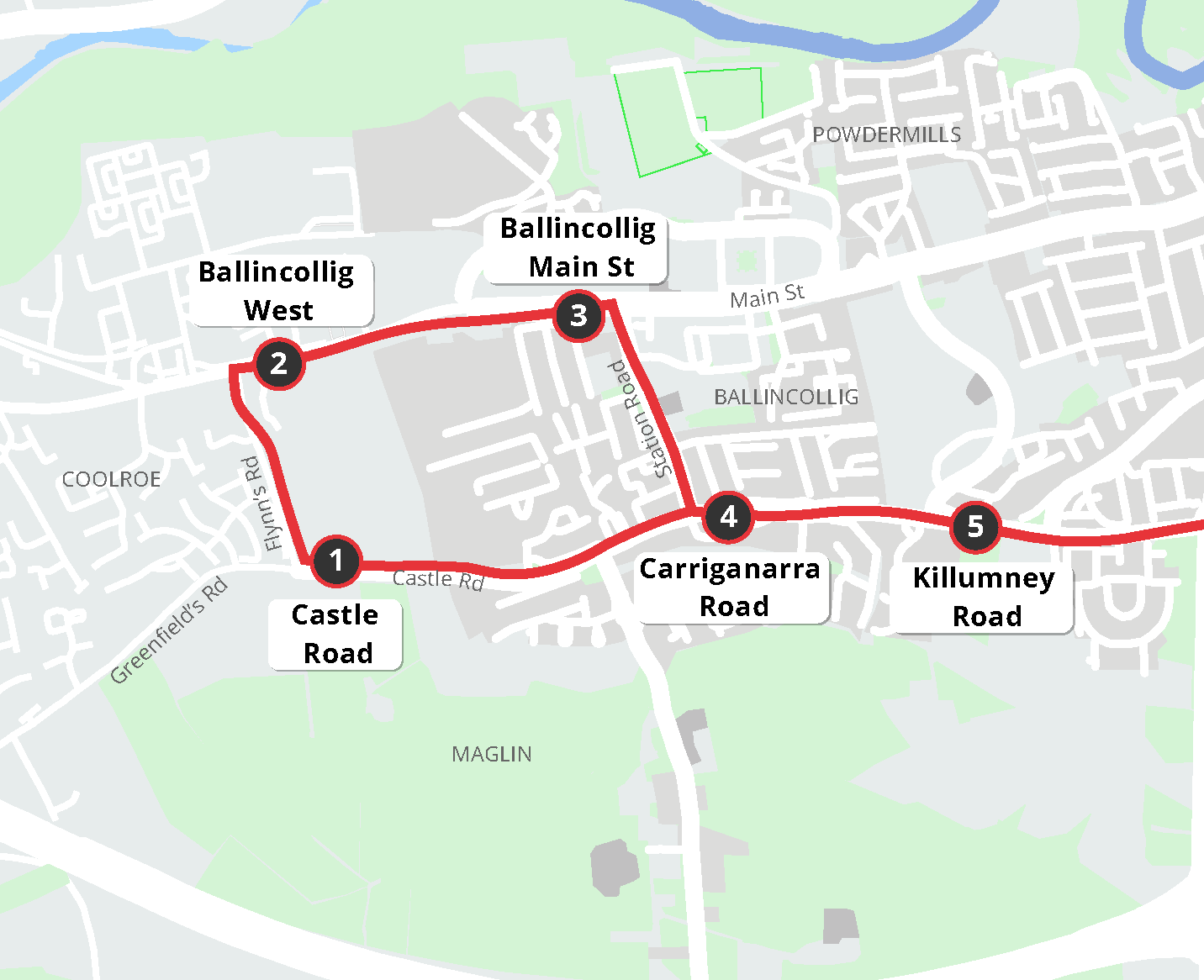
The proposed Preferred Route starts in Ballincollig. In a change from the EPR it begins at the Carriganarra Road/Station Road junction in a single-track loop running on to Castle Road, Flynn’s Road, Ballincollig Main Street (Main Road/ Carrigrohane Road) before turning southwards onto Station Road. Here the loop is complete, and the line continues eastwards in a more typical double-track arrangement.

The  tram is largely segregated from general traffic through Ballincollig, but shares with southbound traffic on Station Road. Beech Park/Barley Grove will be accessible to general traffic from Main Street and from Carriganarra Road but there will be no northbound through-traffic. Some diversion of traffic onto Old Fort Road will help reduce traffic congestion in the village.
Once back on Carriganarra Road, at the bottom of Station Road, the tram travels eastbound on a twin track arrangement across the N22 towards MTU. As per the Emerging Preferred Route (EPR), there is a proposed 1,000 vehicle Park and Ride and Depot facility in what is currently farmland, immediately to the east of the N22 and to the west of Clash Road. A parallel, two-way cycle-path from Ballincollig connects to the Curraheen Greenway at the Curraheen River end of this stretch of the route.
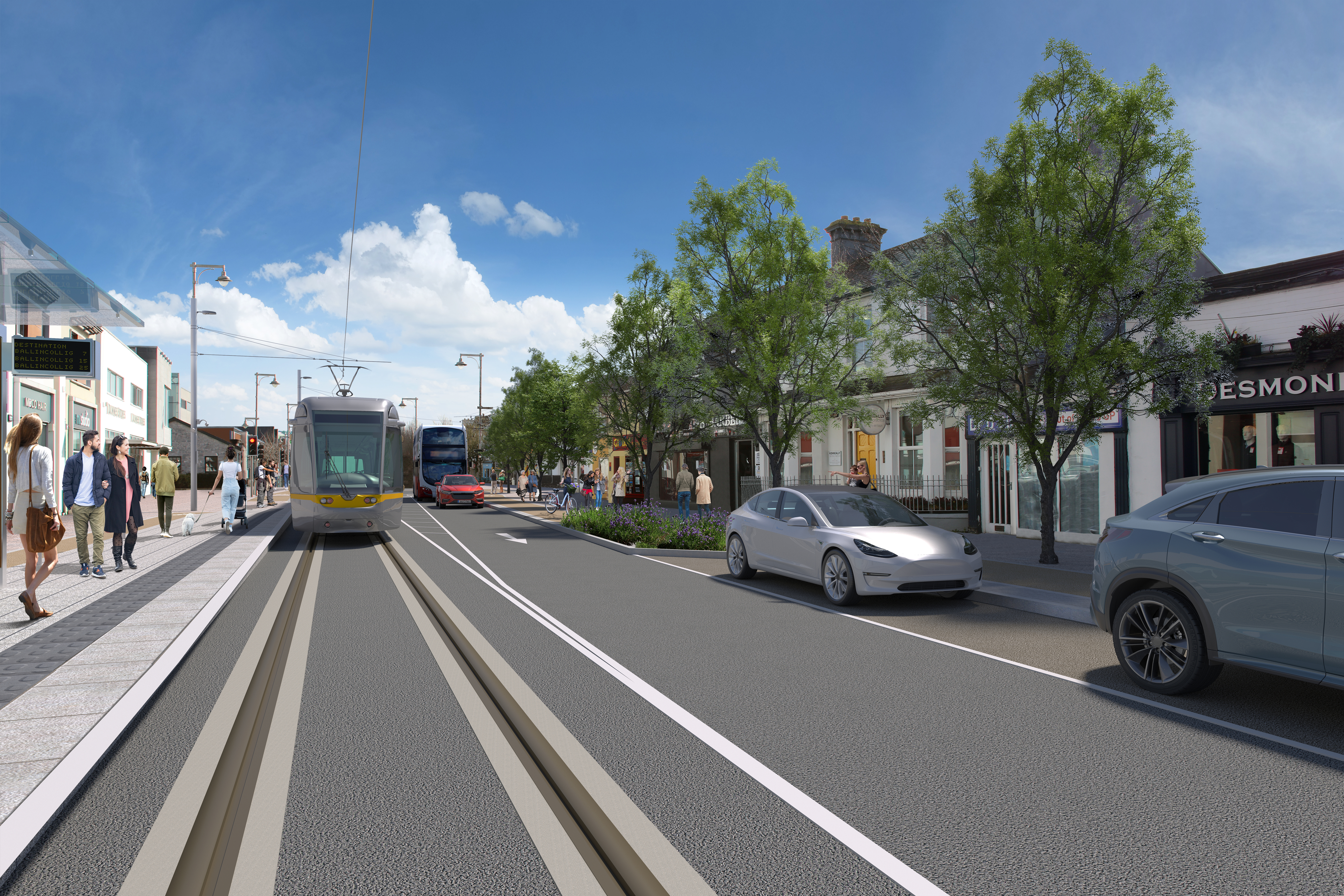
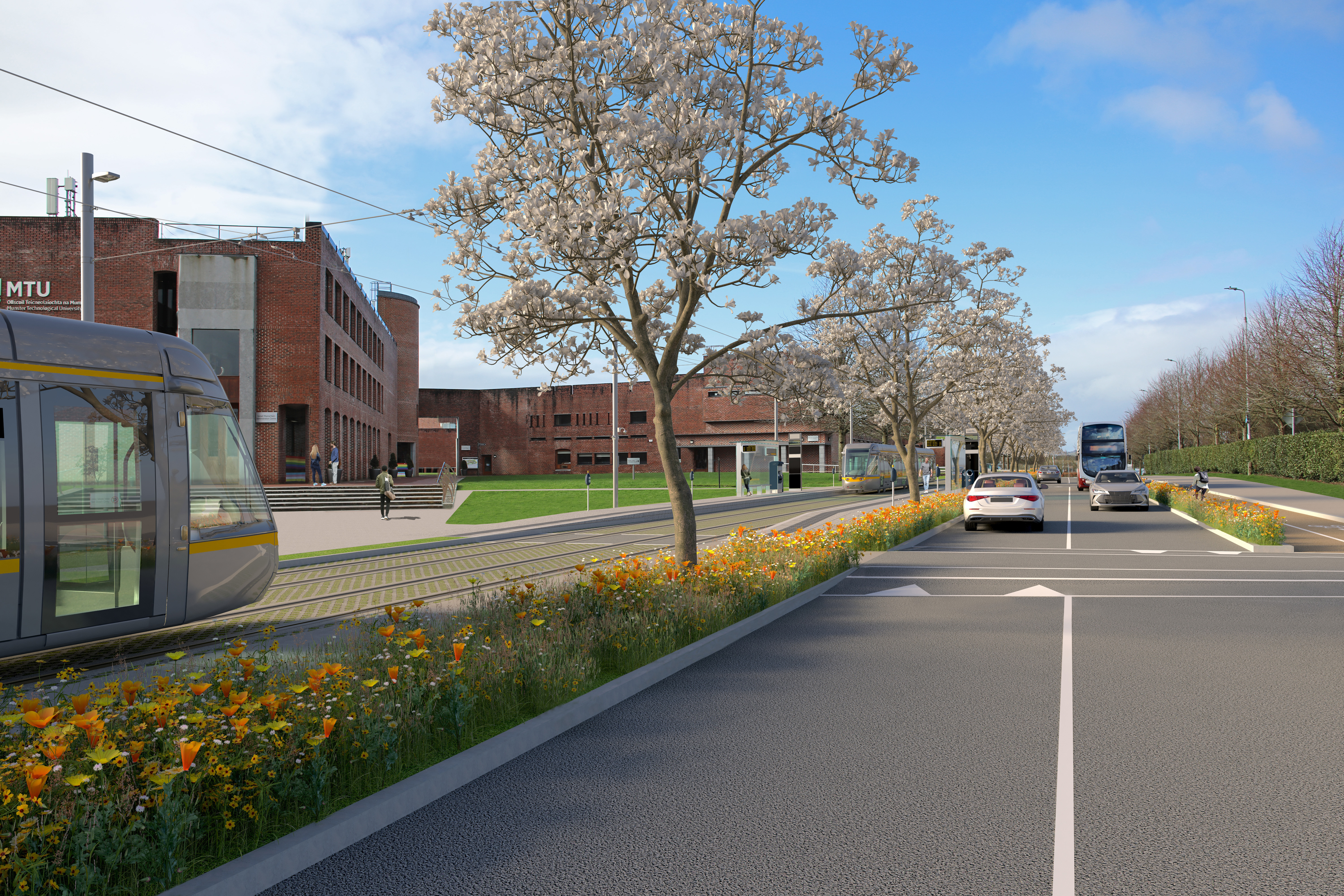
Indicative view of Ballincollig

Indicative view at MTU


Munster Technological University to Wilton Road

The Preferred Route continues through Munster Technological University’s campus on Rossa Avenue. It continues southwards onto Melbourn Road and then turns eastwards and runs uphill past Bishopstown Community School, Ballinaspig Lawn, Bishopstown GAA, Highfield Rugby Club, Coláiste an Spioraid Naoimh, Saint Columba’s Convent and then through CUH campus.


Wilton Road to Washington Street

From CUH, the route travels along Bishopstown Road and Wilton Road towards Dennehy’s Cross and Victoria Cross, turning eastwards onto Western Road towards the city centre. In a change from the EPR, an additional stop is being provided at Victoria Cross to better serve residents and recreational and hospital facilities around the Carrigrohane junction with Victoria Cross. The University College Cork (UCC) stop is being moved closer to the main UCC gates at Donovan Road to improve accessibility to the campus.
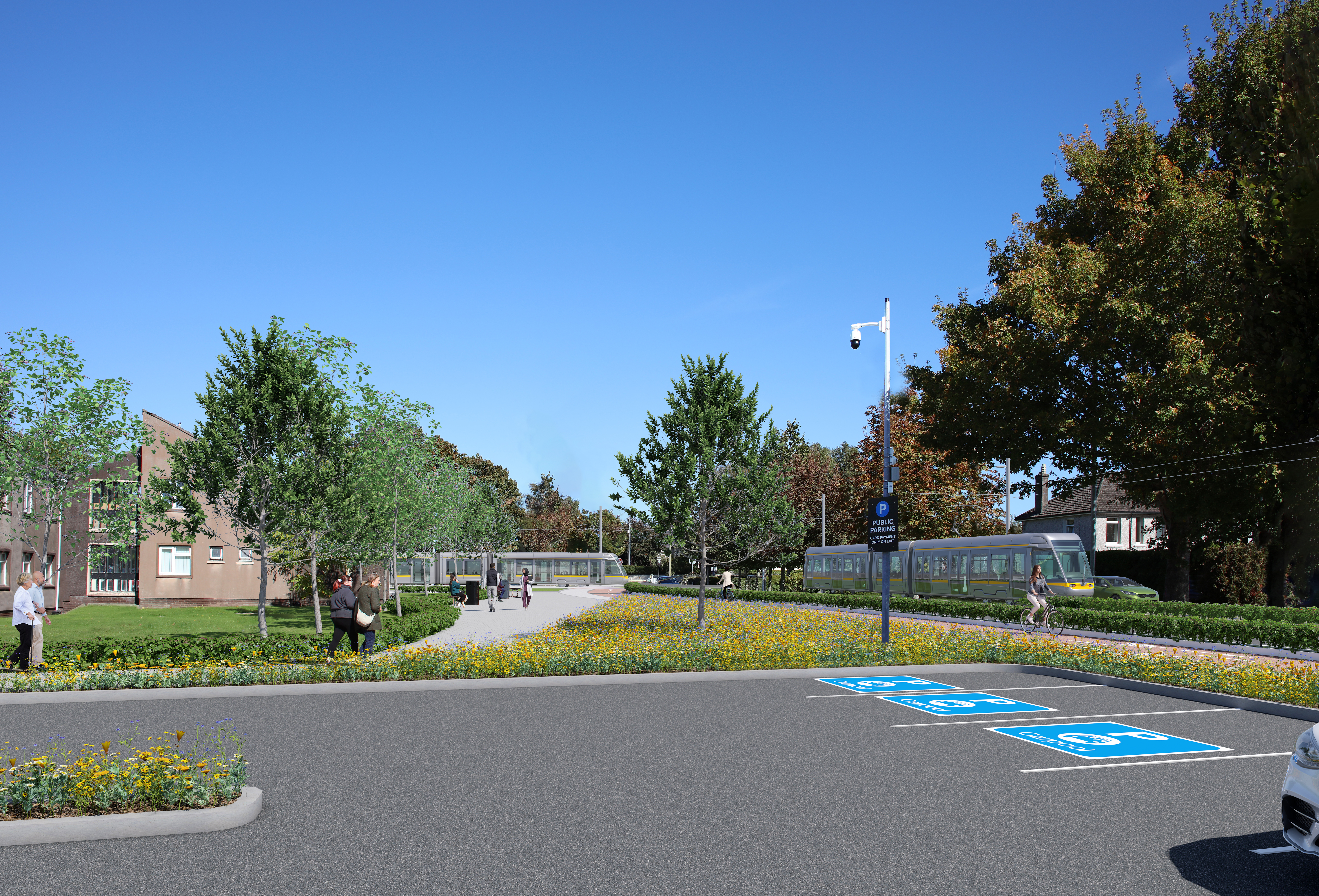
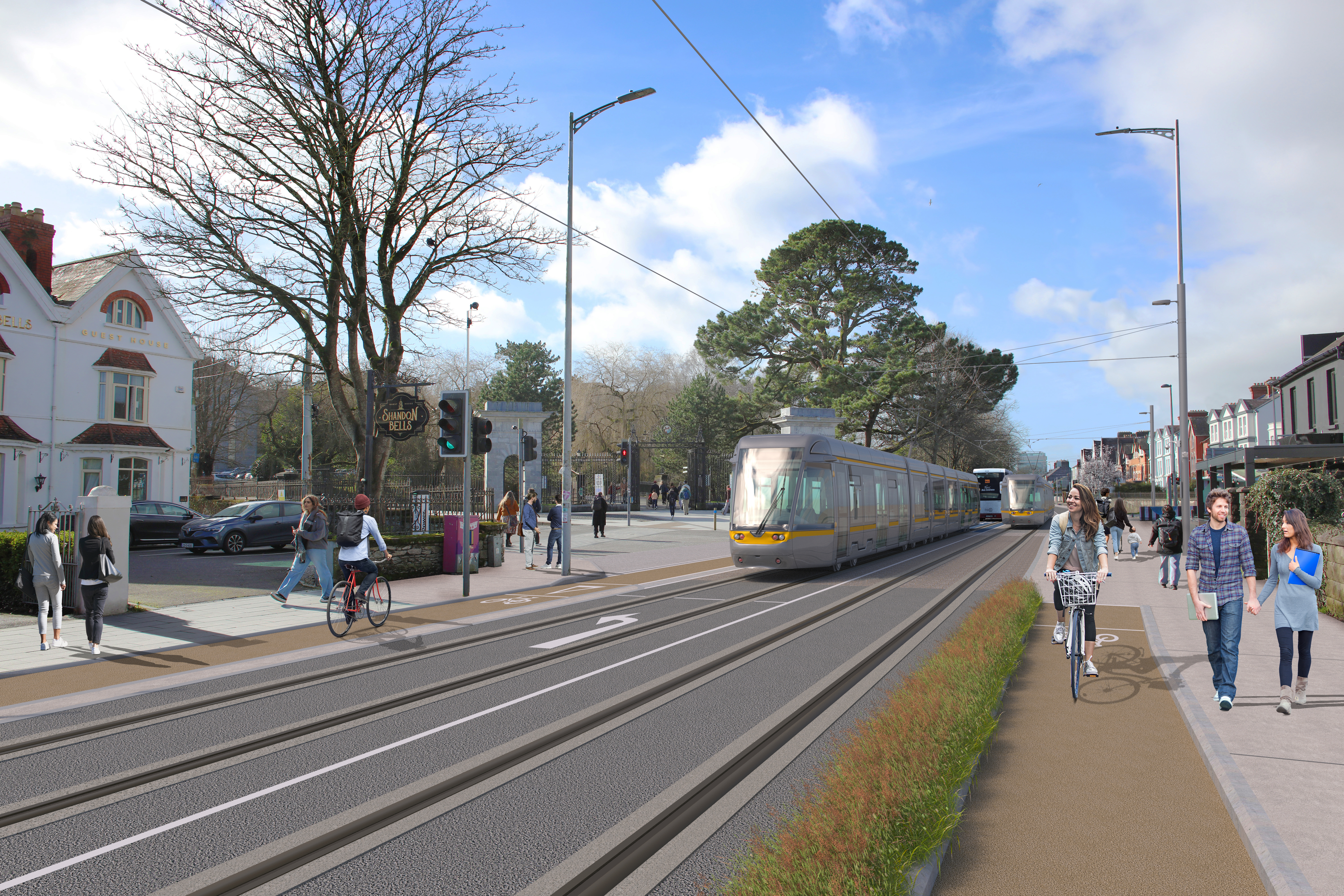
Indicative view at CUH campus

Indicative view of UCC


Washington Street to Kennedy Quay

From Washington Street to Kent Station, the route remains unchanged from the EPR – proceeding through St Patrick’s Street, MacCurtain Street and Kent Station, with a tram stop at each of these locations. The stop at Kent Station will be integrated into the proposed public transport interchange at the rear of the station allowing intermodal transfer to commuter and intercity rail services, buses and cycling facilities. The detail of this stop will be subject to a multi-party design process to be carried out at the next stage.
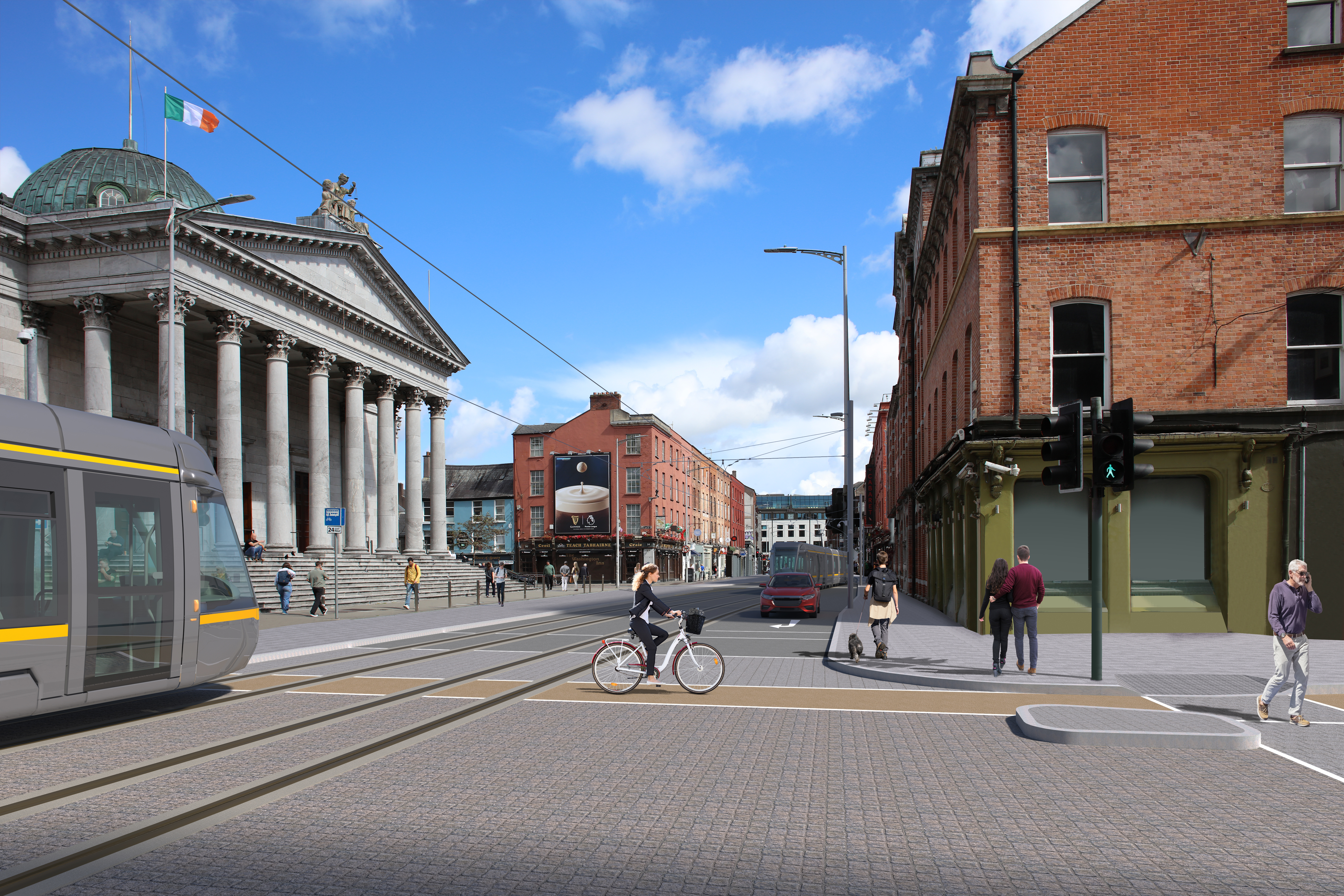
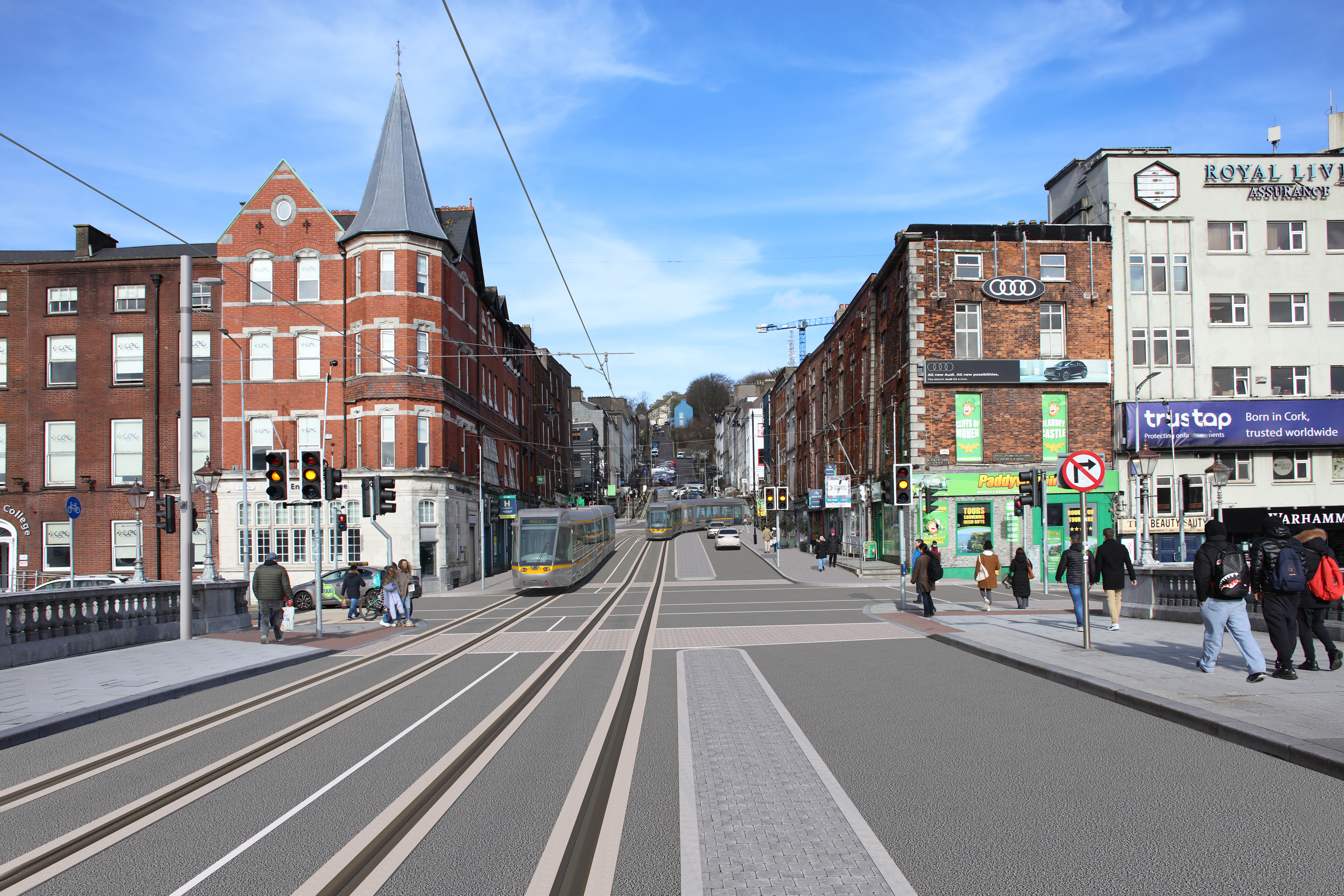
Indicative view of Washington Street

Indicative view of Bridge Street

The Preferred Route then travels southwards on a new public transport bridge over the River Lee from Horgan’s Quay to the south docklands. We have been engaging with representatives of the maritime community about the impact this new bridge will have on river activity and will continue to engage on this issue. We are also engaging with Cork City Council to ensure that the wider development of the docklands is designed in cooperation and as part of an integrated transport and development strategy for Cork Docklands.

Kennedy Quay to Páirc Uí Chaoimh

The route continues southwards before turning east on to Centre Park Road, where the tracks will be fully segregated from other traffic. An additional stop at Docklands accommodates the future development of 20,000 new homes and almost 25,000 jobs.

At the Centre Park Road/Marquee Road junction the line turns southwards before reaching Monahan Road, where it runs along the southern boundary of the newly developed Marina Park.The Páirc Uí Chaoimh stop has been relocated and refined to allow for better crowd circulation, segregation and to facilitate tram turnback.


Páirc Uí Chaoimh to Churchyard Lane

From Páirc Uí Chaoimh, the line runs southbound on Maryville, up the incline, to reach the junction with Blackrock Road, sharing with local access traffic for part of the route.

It continues uphill on Churchyard Lane sharing with southbound traffic as far as the Churchyard Lane/Boreenmanna Road junction, but segregated in a northbound direction. Existing on-street parking on Churchyard Lane will be relocated where possible - including within the Ashcroft Estate. Local traffic diversions will be put in place as part of a traffic management plan for the wider area.
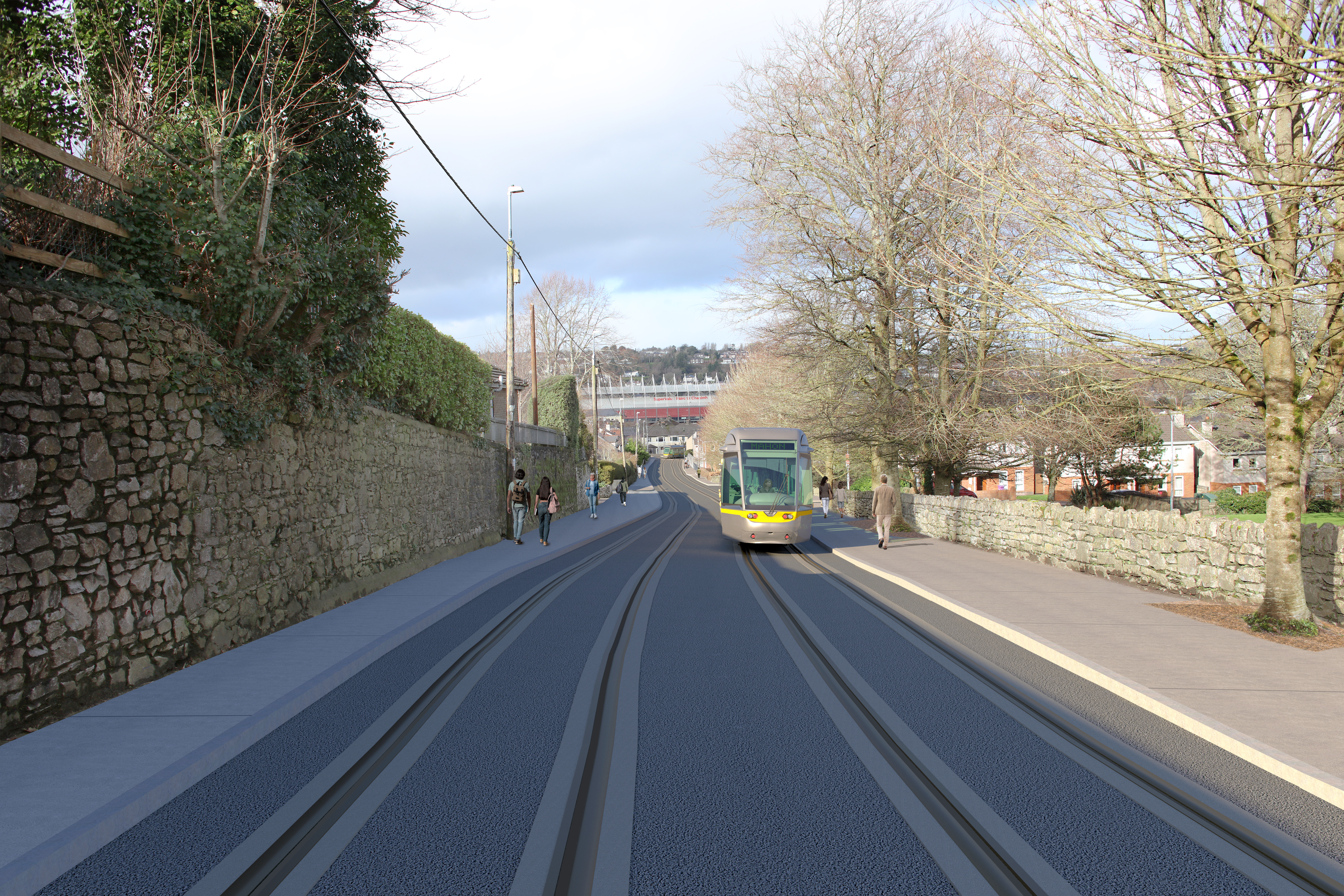
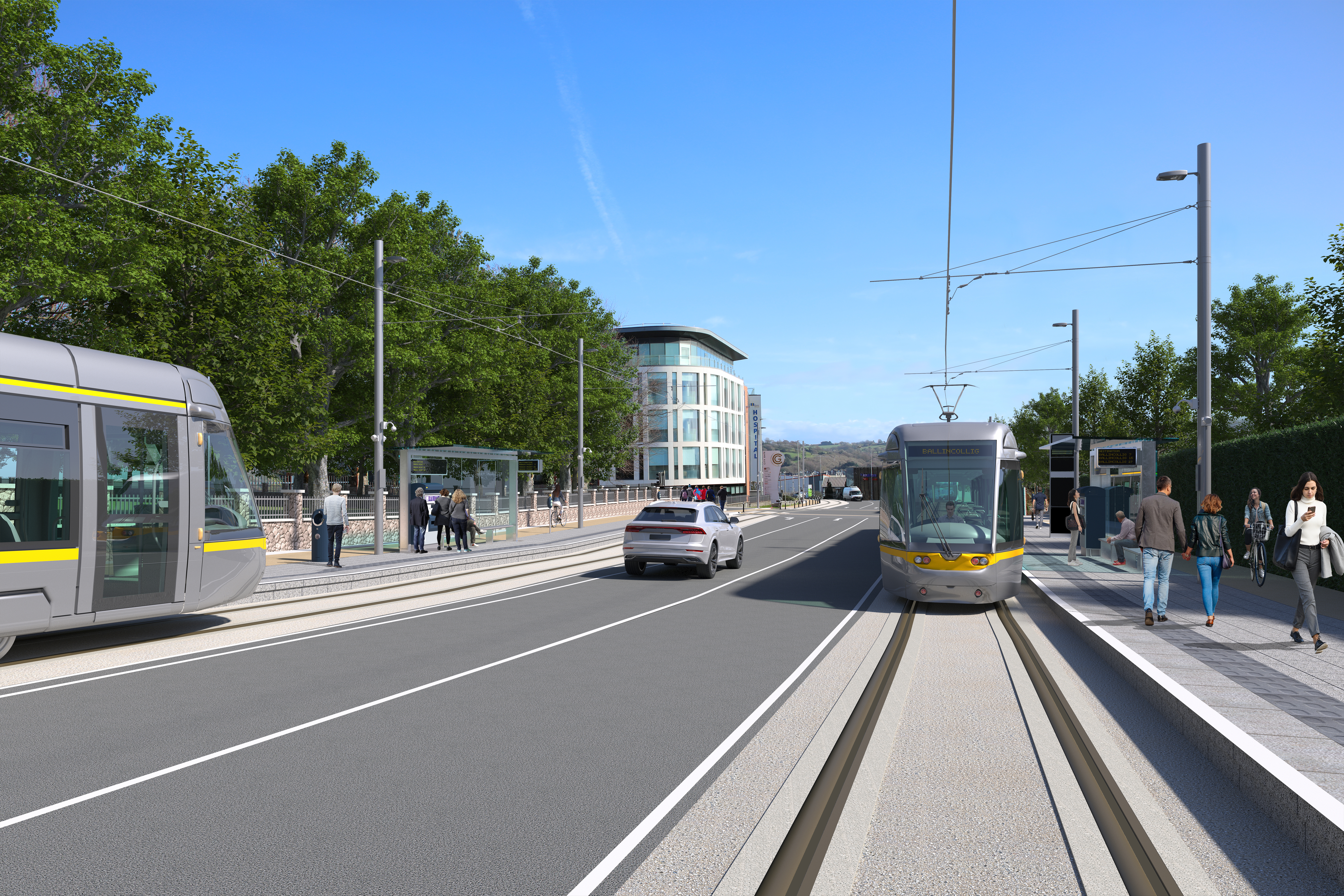
 

Indicative view of Churchyard Lane

Indicative view of Mahon Link Road

Churchyard Lane to Mahon Point

From the Churchyard Lane/Boreenmanna Road junction, the line runs alongside the kerb, primarily segregated from general traffic and with staggered platforms (where the east and west bound platforms aren't opposite each other) at Beaumont Quarry and Cork Constitution. It then proceeds along Skehard Road and travels eastwards, with a stop located at the junction with Well Road. A staggered platform is provided in place of the previous Woodvale stop location, removing impacts to private driveways. The westbound Luas stop platform will be at Kilbrack Grove and the eastbound stop platform will be at Woodvale Road.

The Preferred Route then continues on Skehard Road, before turning southwards onto Mahon Link Road. A kerbside arrangement will share with buses as far as the terminus at Mahon Point.

Luas Cork Benefits

A carbon-neutral future

High-quality public transport projects like Luas Cork are key to delivering housing, such as the development of the Cork City Docklands, expected to deliver 20,000 new homes and almost 25,000 jobs. The European Commission has selected Cork to become one of Europe’s first climate neutral cities by 2030. Transport emits over 20 per cent of greenhouse gases in Ireland, so transforming transport is vital to make Cork a smart, carbon neutral city.

Reliable journey times

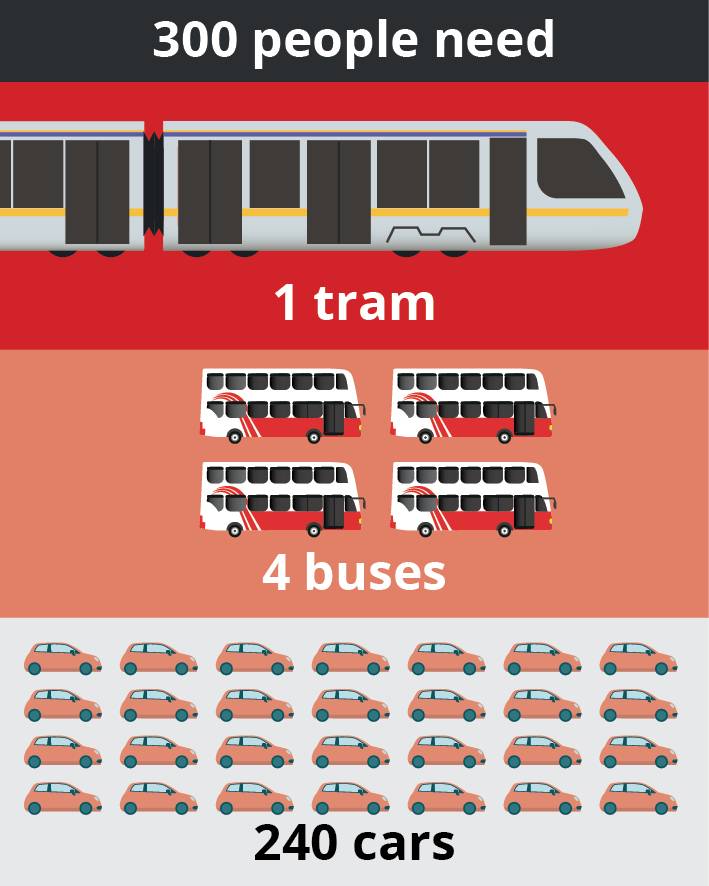
Luas Cork will offer more reliable journey times than other forms of travel. This will encourage people to leave their cars behind, freeing up space for emergency vehicles and essential travel. Luas Cork will help to reduce congestion in the city, offering choice and allowing people to avoid long commutes and unreliable, stressful journeys.

Integrated Travel

Luas Cork will create interchange opportunities with regional and intercity bus services from various city locations, including Cork City Bus Station at Parnell Place, via the Mary Elmes pedestrian bridge from MacCurtain Street. It will interchange with intercity and commuter rail services at Kent Station, while the ongoing rollout of BusConnects Cork has also been considered alongside Luas Cork.

P&R and Mobility Hub

A 1,000-space park and ride is proposed at Clash Road to enable commuters from the N40 and N22 switch from car or bus to Luas. This P&R interchange will also include secure cycle-parking, bike-share stands, taxi and car drop-off spaces.

A smaller Mobility Hub is proposed for the terminus in Mahon Point, which will also facilitate interchange between bus and Luas, and provide car and taxi set-down, secure bike parking and bike-share stands, connecting people from the wider area to the Luas.

Safe and designed for all

Trams provide step-free access, allowing passengers with mobility issues, luggage or buggies to simply stroll on and off. We will work to ensure that universal design and accessibility is at the heart of our design approach.

Public realm, landscape and active travel

A high-quality tram system can have a positive additional benefit on street-scapes and on the urban realm. It’s an opportunity to create social spaces, to use sympathetic materials and to green the streets, using street trees and sustainable urban drainage schemes (SUDs).

As Luas Cork develops from a Preferred Route to a more detailed design, the public spaces, local landscapes, cycle routes, places and connections will all be developed and integrated into the scheme.

Opportunities and Challenges

Delivering public infrastructure like Luas Cork will raise issues for those directly affected. We are committed to a meaningful and ongoing process of consultation and engagement with everyone affected by this proposal. Your feedback will help us better understand some of the issues and challenges we face.

Traffic Management

During construction and operation, Luas Cork will impact traffic flows. Planning how to manage this traffic is part of our consultation process and will develop along with the design. At every stage of design, right up to the Railway Order process we will keep all stakeholders informed of issues that may affect them.


Property Acquisition

The proposed route will require some acquisition of private land. TII is committed to ensuring that any land acquisitions are managed in a fair and equitable manner. The scheme is currently at route selection stage and precise land-take requirements are not yet defined. We will keep communicating with landowners and tenants throughout the design process.

Environmental Impact

During the design development process, we will work to avoid and reduce environmental impacts and seek innovative environmental approaches to how we design and construct the scheme. Consideration of the principles of sustainability, including for example those of circular economy, low carbon materials and biodiversity will all form part of the design process.

Cultural Heritage

As with any construction project, Luas Cork has the potential to impact cultural heritage. We will endeavour to avoid all unnecessary impacts on important sites. This will be achieved through careful design, the Environmental Impact Assessment process and consultation with all relevant stakeholders. TII operates under a Code of Practice with the Department of Housing, Local Government and Heritage, which reflects our commitment to appropriately protect this resource.

Next Steps

Have your say

Your local knowledge will help us to improve the scheme and ensure it will be a success for you and the communities the route will serve. This is your chance to have your say on the proposed route.

Email & Post

You can also send us your submission by post and email

Luas Cork, Transport Infrastructure Ireland, PO Box 13605,Little Island, Cork.

info@luascork.ie


TII Consultation Portal

You can make your submission on the TII consultation portal here.

Telephone

If you have any questions, you can also phone us on

1800 777 321

Our phone line is open 24 hours a day for your messages. We aim to return your call between 9:30am and 5pm the next working day.


To provide an open and transparent consultation experience, all submissions, including the names of those who make them, will be published online once they have been reviewed and processed by the Luas Cork team.

When the consultation closes, we will review your submissions and publish a report on the consultation.

Full details of our moderation policy, privacy policy, and all other terms and conditions, are here.

Tá an láithreán gréasáin as gaeilge ag teacht go luath.

Downloads

PDF of Luas Cork Brochure

Luas Cork Brochure

Luas Cork book 1 - Ballincollig Area Download

Book 1 - Ballincollig Area

Book 2 - Cork City West Area

Book 2 - Cork City West Area

Book 3 - Cork City Centre Area Download

Book 3 - Cork City Centre Area

Image of Luas Cork Maps

Book 4 - Cork City East Area

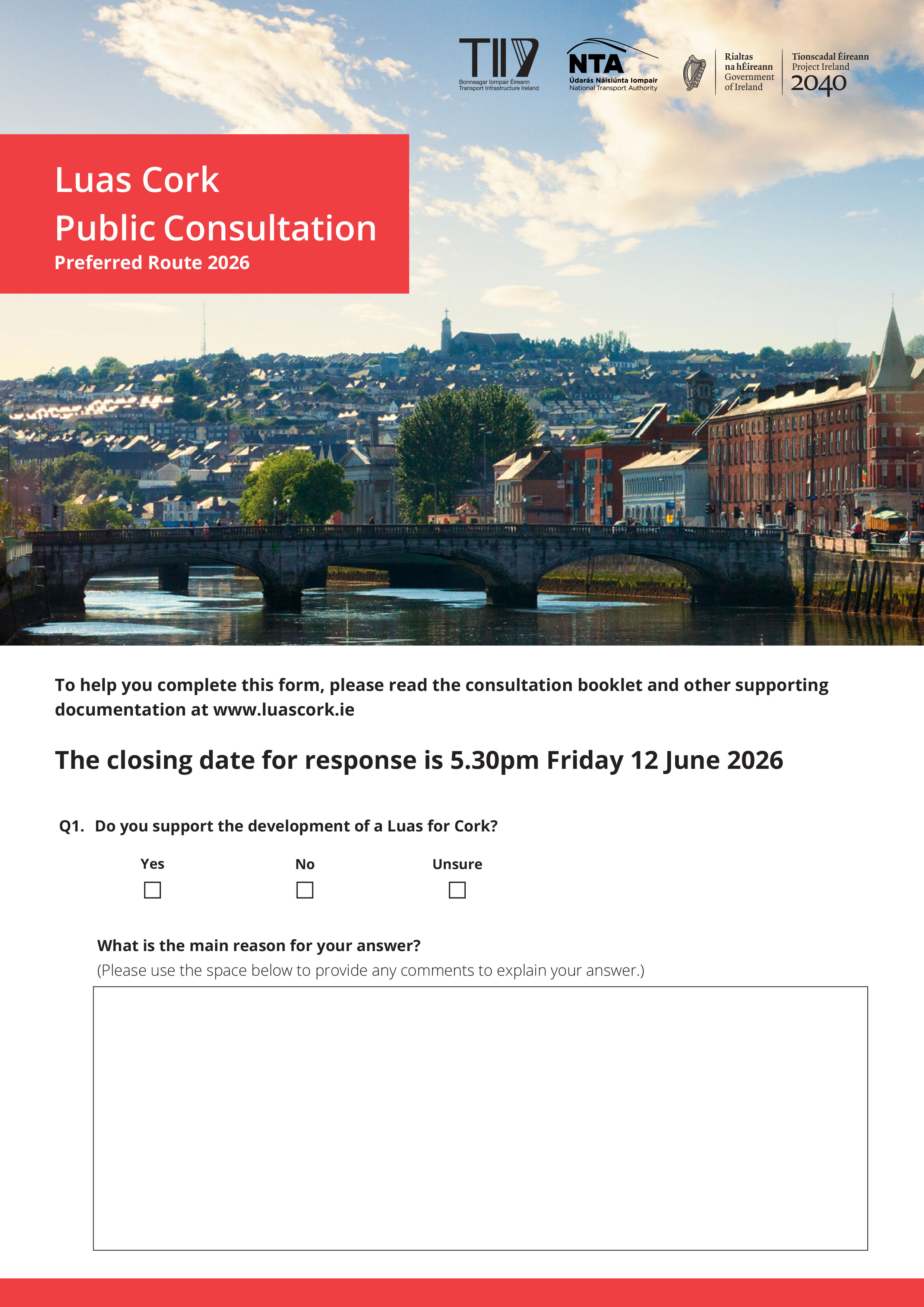
Download a submission form

Download A Submission Form

High definition image of the Luas Cork Proposed Route Map

Route Map

Luas Cork Post Consultation Report

Post Consultation Report

Preferred Route Options Report

Preferred Route Options Report

Contact

By Post  Luas Cork, Transport Infrastructure Ireland, PO Box 13605, Little Island, Cork

Email  info@luascork.ie

Phone 1800 777 321

Our phone line is open 24 hours a day. If you leave a message, we'll aim to return your call between 9:30am and 5pm the next working day.